First Published: March 2025
Updated: April 2026
If you’re searching for sleep dentistry in Brisbane, it’s often because dental visits feel stressful, uncomfortable, or overwhelming.
You’re not alone — and more importantly, there are ways to make treatment feel significantly more manageable.
For some people, it’s a mild sense of unease. For others, it’s a strong fear that leads to delaying appointments for months — or even years. Over time, this can create a cycle where dental problems build up, making it feel even harder to start.
The important thing to know is this: There are ways to approach dental care that feel calmer, more controlled, and better suited to you.

Why do people feel anxious about the dentist?
Dental anxiety is more common than most people realise. It often comes from a combination of factors:
- Past negative experiences
- Fear of pain or needles
- Feeling out of control in the chair
- Embarrassment about the condition of teeth
- A general tendency toward anxiety
For some people, this develops into dental phobia — a stronger fear response that can make even booking an appointment feel overwhelming.
This isn’t about being “bad at coping”. It’s a normal response, and it’s something we see and manage every day.

You don’t have to “push through it”
A common mistake is thinking you just need to tolerate it.
In reality, most anxious patients do better with a different approach:
- Starting with a conversation rather than treatment
- Moving step-by-step rather than doing everything at once
- Knowing exactly what to expect
- Having control during the appointment
Even small changes — like agreeing on a stop signal — can make a significant difference.

When is dental sedation worth considering?
For some patients, reassurance and pacing are enough.
For others, sedation can be the turning point.
Dental sedation may help if you:
- Feel panicky or overwhelmed in the chair
- Have a strong gag reflex
- Need longer or more complex treatment
- Have been avoiding the dentist for a long time
- Want to be less aware of the procedure
Sedation doesn’t replace good dental care — it makes it easier to go through it.
What is “sleep dentistry”?
Many people use the term “sleep dentistry” when they’re looking for a more relaxed, low-stress dental experience.
In most cases, this refers to IV sedation (also called twilight sedation).
In Brisbane, IV sedation is one of the most effective ways to help patients feel deeply relaxed during dental treatment.
With IV sedation:
- You feel calm and at ease
- Time often feels like it passes quickly
- You may remember little of the appointment
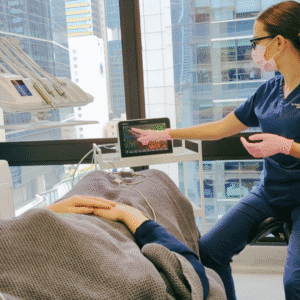
- You are still breathing on your own and closely monitored
It’s not the same as being fully asleep under general anaesthetic, but for many patients it feels like they’ve “slept through” the experience.
If you’re considering this option, it can help to understand exactly what happens during treatment. This guide explains what happens during IV sedation step by step.
Other ways to make dental visits easier
Sedation isn’t the only option. Many patients benefit from:
- Clear explanations before and during treatment
- A calm, low-pressure environment
- Gradual treatment planning
- Distraction (music, headphones)
- Relaxation techniques
Often, a combination of these approaches works best.

If you’ve been avoiding the dentist
A lot of patients delay treatment because they feel embarrassed.
This is very common — and it’s not something you need to “fix” before coming in.
The only thing that matters is starting from where you are now.
For most people, the best first step is a simple consultation. From there, we can:
- Understand what’s going on
- Prioritise what actually needs to be done
- Plan treatment in a way that feels manageable
- Talk through whether sedation is appropriate
What happens next?
If anxiety, discomfort, or past experiences have been holding you back, there are options.
You don’t need to commit to treatment straight away — just start with a conversation. The first step would be to book a dental consultation where the dentist can come up with your dental treatment plan. The second step is a sedation suitability consultation and assessment.
👉 Learn more about sedation options here
Ready to take the first step?
If dental anxiety or the idea of treatment has been holding you back, the first step is simply a conversation.
A consultation allows us to:
- understand your concerns
- assess your oral health
- talk through your options (including sedation, if appropriate)
- create a plan that feels manageable
There’s no pressure to proceed — just a clear, supportive starting point.
👉 Book a consultation online
👉 Or call our team on (07) 3211 1155